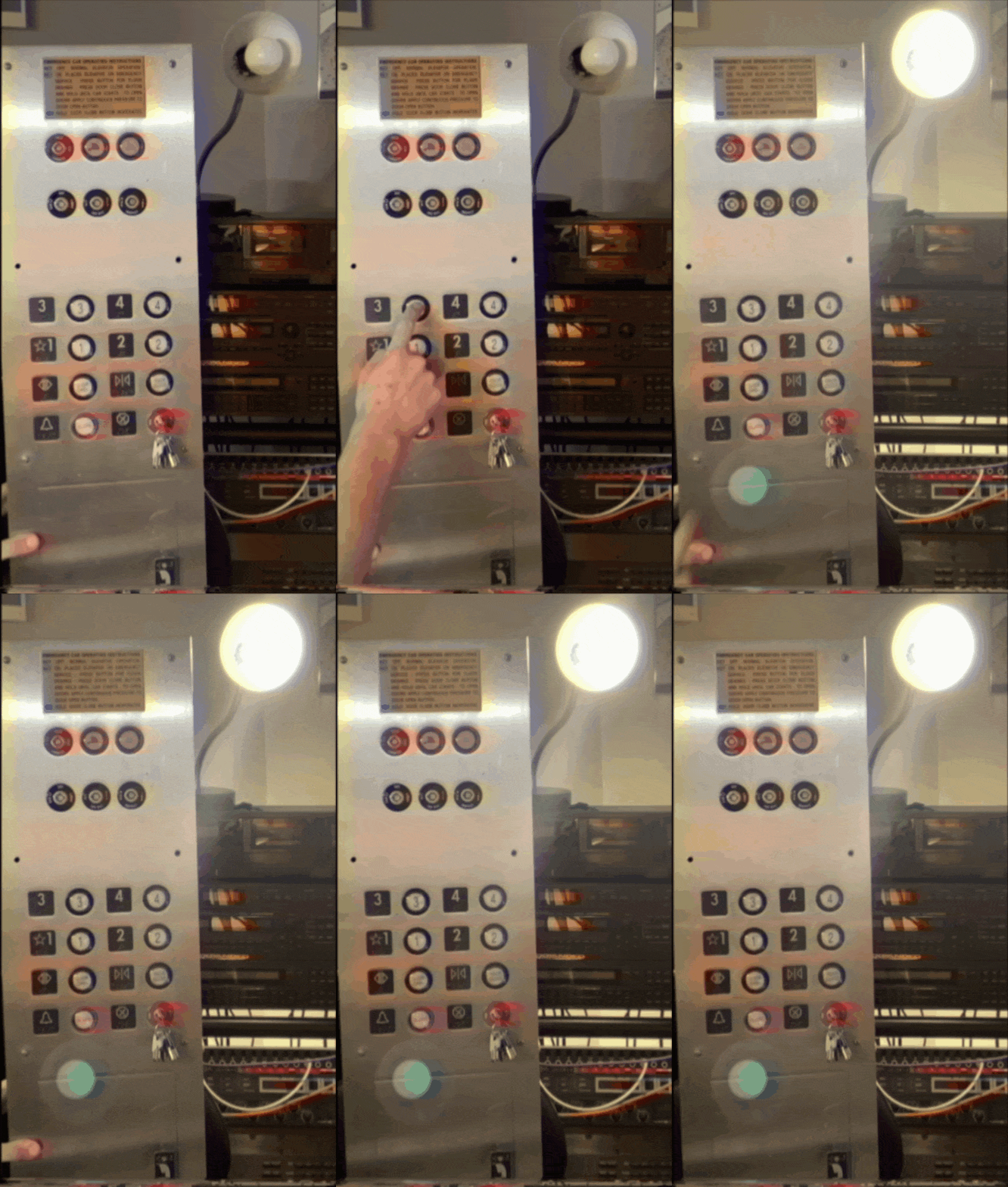
A salvaged elevator control panel converted into a light switch. Six of the original controls are wired through: four numbered floor buttons and the two door buttons. Each one drives a Philips WiZ bulb in the room. The panel was not modified beyond the wiring. The buttons retain their original travel, weight, and audible chunk.
How it works
A Philips WiZmote, the four-scene RF remote that ships with the WiZ ecosystem, was opened and its PCB extracted. The remote uses tactile dome switches under each rubber key. Two wires were soldered across the contact pads of each dome, and the other ends were terminated at the corresponding switch on the elevator panel. Pressing a panel button closes the contact on the remote PCB exactly as a finger on the remote would.
The remote's original AAA cells still power it. The panel itself carries no electronics. It is a passive wiring harness for six remote buttons mounted in a much heavier enclosure. RF goes from the bridged remote to the WiZ bulbs over the standard WiZ protocol. The scenes themselves are configured in the WiZ app and assigned to the four numbered slots on the remote.
The mapping
| Panel button | Action |
|---|---|
| Door Open | Lights on |
| Door Close | Lights off |
| Floor 1 | Bright (work) |
| Floor 2 | Cozy warm |
| Floor 3 | Evening |
| Floor 4 | Jazz mode |
Design intent
The panel is heavy. The buttons travel a long way before the contact closes, and the click is loud enough to hear across a room. They were engineered to be pressed thousands of times by people in a hurry, with gloves on, in poor light. None of that physicality survives the move to a phone app or a glass touch panel.
The conversion preserves the original interaction and changes only what it controls. The gesture is the same; the consequence is different. A floor is no longer a floor. The chunk is intact.